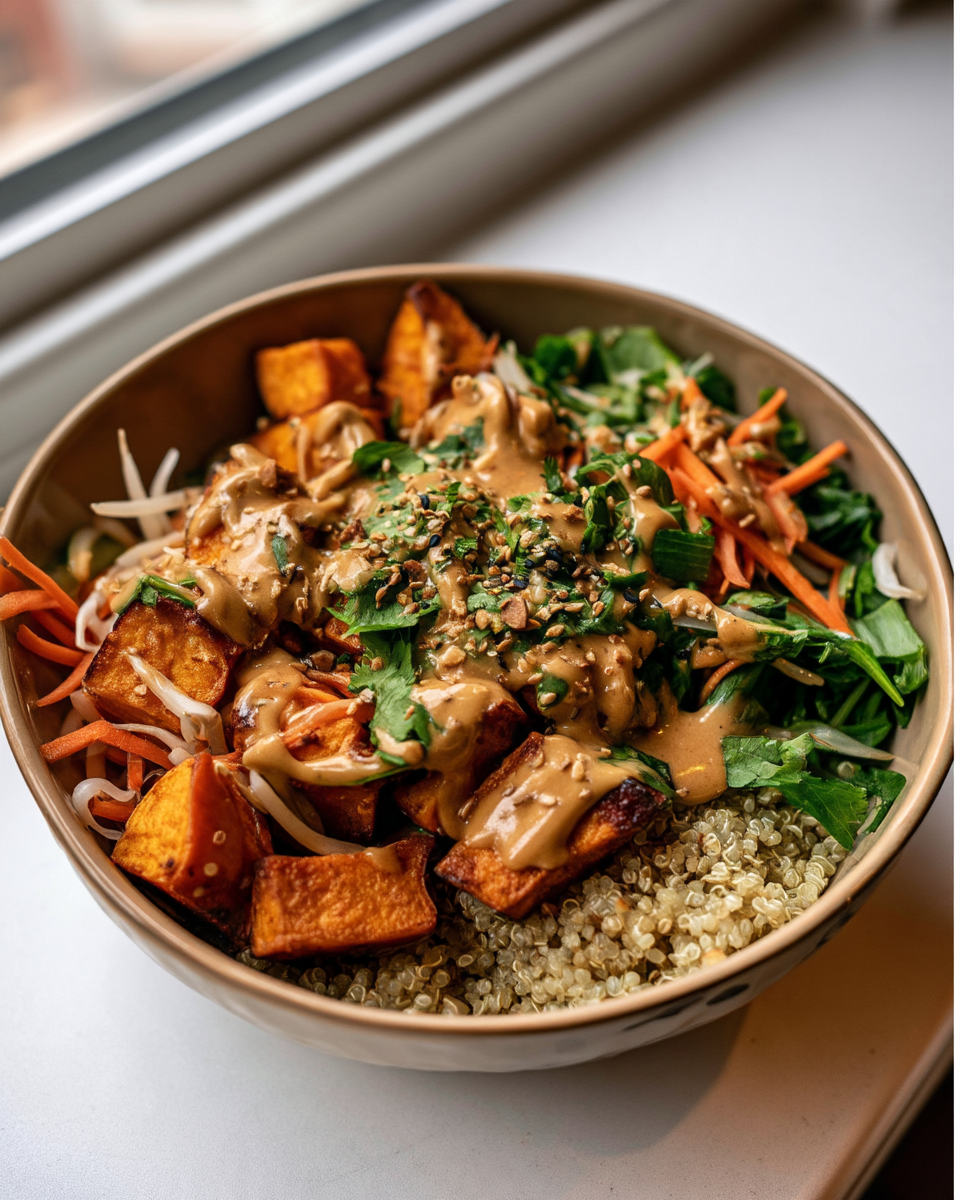
This Thai Peanut Sweet Potato Buddha Bowl combines roasted sweet potatoes, fluffy quinoa or brown rice, crisp vegetables, optional roasted tofu, and a creamy homemade peanut sauce. The result is a colorful vegan bowl with sweet, savory, tangy, and nutty flavors in every bite. With roasted sweet potatoes, shredded red cabbage, carrots, broccoli, cilantro, and a rich Thai-inspired peanut dressing, it makes a satisfying weeknight dinner and also works well for meal prep when the components are stored separately.
Quick Recipe Snapshot
- Prep Time: 15 minutes
- Cook Time: 30 minutes
- Total Time: 45 minutes
- Servings: 4
- Main Cooking Method: Roasting and Stovetop
Why You’ll Love This Recipe
- Flavor-packed: Creamy peanut sauce brings together the roasted vegetables, grain, and fresh toppings.
- Colorful and varied: Sweet potatoes, broccoli, red cabbage, carrots, cilantro, and peanuts create plenty of texture and color.
- Flexible base: Use quinoa or brown rice depending on what you have available.
- Optional protein: Extra-firm tofu can be roasted or pan-fried and added to the bowl.
- Meal-prep friendly: The components can be stored separately and assembled when you’re ready to eat.
Ingredients
For the Buddha Bowls
- 2 medium sweet potatoes, peeled and cubed
- 1 tablespoon olive oil
- 1/2 teaspoon salt
- 1/4 teaspoon black pepper
- 1 cup dry quinoa or brown rice
- 2 cups water or vegetable broth
- 1 block (14 oz) extra-firm tofu, pressed and cubed (optional protein)
- 1 head broccoli, cut into florets
- 1 cup shredded red cabbage
- 2 carrots, julienned
- 1/2 cup chopped fresh cilantro
- 1/4 cup chopped peanuts, for garnish
For the Thai Peanut Sauce
- 1/2 cup creamy peanut butter
- 1/4 cup low sodium soy sauce or tamari
- 2 tablespoons rice vinegar
- 2 tablespoons maple syrup or honey
- 1 tablespoon fresh lime juice
- 1 teaspoon grated fresh ginger
- 1 clove garlic, minced
- 1/4 to 1/2 cup hot water, to thin
The sweet potatoes bring natural sweetness and a roasted, caramelized flavor. The peanut butter, soy sauce or tamari, rice vinegar, maple syrup or honey, lime, ginger, and garlic create the creamy Thai-inspired sauce that ties everything together.
How to Make Thai Peanut Sweet Potato Buddha Bowls
- Roast the sweet potatoes. Preheat your oven to 400°F (200°C). Toss the cubed sweet potatoes with olive oil, salt, and pepper. Spread them in a single layer on a baking sheet. Roast for 20 to 25 minutes, flipping halfway, until tender and slightly caramelized.
- Cook the grain. While the potatoes roast, combine the quinoa or rice with water or vegetable broth in a saucepan. Bring to a boil, then reduce the heat to low, cover, and simmer for 15 minutes for quinoa or 40 minutes for brown rice, until all the liquid is absorbed. Fluff with a fork.
- Prepare the tofu, if using. Toss the tofu cubes with a dash of soy sauce and roast alongside the sweet potatoes for the last 15 minutes, or pan-fry until golden brown.
- Make the Thai peanut sauce. In a small bowl or jar, whisk together the peanut butter, soy sauce, rice vinegar, maple syrup, lime juice, ginger, and garlic. Slowly whisk in hot water, one tablespoon at a time, until the sauce reaches a smooth, pourable consistency.
- Cook the broccoli. Steam or lightly blanch the broccoli florets until crisp-tender.
- Assemble the bowls. Divide the cooked grain among serving bowls. Arrange the roasted sweet potatoes, tofu if using, broccoli, red cabbage, and carrots neatly over the grain base.
- Add the sauce and garnish. Drizzle generously with the creamy peanut sauce. Garnish with fresh cilantro and chopped peanuts. Serve immediately.
Important Cooking Tips
- Spread the sweet potatoes in a single layer: This gives them room to roast rather than crowding them on the baking sheet.
- Flip the potatoes halfway: Turning them during roasting helps them cook evenly and develop slight caramelization.
- Adjust the peanut sauce gradually: Add the hot water one tablespoon at a time until the sauce becomes smooth and pourable.
- Keep the broccoli crisp-tender: Steam or lightly blanch it rather than cooking it until very soft.
- Fluff the grain before assembling: This keeps the base light and makes it easier to divide between the bowls.
- Keep components separate for meal prep: Store the sauce separately so the vegetables and other ingredients don’t become soggy.
Storage & Make-Ahead
This recipe works well for meal preparation. Store the cooked grain, roasted sweet potatoes, tofu if using, and vegetables separately from the Thai peanut sauce.
The supplied recipe specifically recommends keeping the sauce separate from the bowl components to prevent the vegetables from becoming soggy. Assemble the bowls just before eating.
Simple Variations
Gluten-Free
For a gluten-free version, use tamari instead of soy sauce in the dressing.
Without Tofu
For a plant-based bowl without tofu, the supplied recipe suggests using 1 cup of rinsed and drained chickpeas tossed with a little smoked paprika before roasting.
Quinoa or Brown Rice
Choose quinoa or brown rice as the grain base. The cooking time differs, so follow the supplied timing for whichever grain you use.
Serving Ideas
- Serve the bowls immediately with the peanut sauce drizzled over the top.
- Arrange the vegetables in separate sections for a colorful presentation.
- Finish each bowl with fresh cilantro and chopped peanuts.
- Serve as an easy weeknight lunch or dinner.
- Prepare individual components ahead of time for convenient meal-prep lunches.
FAQ
Can I make these Buddha bowls ahead of time?
Yes. The recipe notes that it is suitable for meal prepping. Store the sauce separately from the bowl components and assemble just before eating.
Can I use brown rice instead of quinoa?
Yes. The recipe allows either quinoa or brown rice. Quinoa simmers for 15 minutes, while brown rice simmers for 40 minutes, until the liquid is absorbed.
Can I make the bowl without tofu?
Yes. Tofu is listed as an optional protein. The supplied recipe also suggests using 1 cup of rinsed and drained chickpeas tossed with a little smoked paprika before roasting.
How do I thin the peanut sauce?
Slowly whisk hot water into the sauce, one tablespoon at a time, until it reaches a smooth, pourable consistency. The recipe calls for 1/4 to 1/2 cup hot water.
How do I keep the vegetables from becoming soggy?
For meal prep, store the sauce separately from the vegetables and other bowl components. Add the sauce when you’re ready to eat.
Nutrition
The supplied recipe provides the following nutrition information per serving:
- Calories: 550
- Protein: 25 g
- Carbohydrates: 60 g
- Fat: 28 g
- Fiber: 10 g
Final Thoughts
This Thai Peanut Sweet Potato Buddha Bowl brings together roasted, fresh, creamy, crunchy, and savory elements in one satisfying meal. The peanut sauce is the finishing touch that connects the sweet potatoes, grain, vegetables, and optional tofu. For an easy weeknight dinner or make-ahead lunch, it is a colorful bowl worth keeping in your recipe rotation. Save it for the next time you want a flavorful meal built from simple components.
PrintThai Peanut Sweet Potato Buddha Bowl – Easy Vegan Weeknight Dinner

Make this satisfying Thai Peanut Sweet Potato Buddha Bowl for a flavorful, balanced, and easy weeknight dinner. It features roasted sweet potatoes, crisp vegetables, and a rich, creamy peanut sauce.
- Prep Time: 15 minutes
- Cook Time: 30 minutes
- Total Time: 45 minutes
- Yield: 4 servings 1x
- Category: Lunch
- Method: Roasting and Stovetop
- Cuisine: Thai Inspired
- Diet: Vegan
Ingredients
- 2 medium sweet potatoes, peeled and cubed
- 1 tablespoon olive oil
- 1/2 teaspoon salt
- 1/4 teaspoon black pepper
- 1 cup dry quinoa or brown rice
- 2 cups water or vegetable broth
- 1 block (14 oz) extra-firm tofu, pressed and cubed (optional protein)
- 1 head broccoli, cut into florets
- 1 cup shredded red cabbage
- 2 carrots, julienned
- 1/2 cup chopped fresh cilantro
- 1/4 cup chopped peanuts, for garnish
- 1/2 cup creamy peanut butter
- 1/4 cup low sodium soy sauce or tamari
- 2 tablespoons rice vinegar
- 2 tablespoons maple syrup or honey
- 1 tablespoon fresh lime juice
- 1 teaspoon grated fresh ginger
- 1 clove garlic, minced
- 1/4 to 1/2 cup hot water, to thin
Instructions
- Preheat your oven to 400°F (200°C). Toss the cubed sweet potatoes with olive oil, salt, and pepper. Spread them in a single layer on a baking sheet. Roast for 20 to 25 minutes, flipping halfway, until tender and slightly caramelized.
- While the potatoes roast, cook the grain. Combine quinoa (or rice) and water/broth in a saucepan. Bring to a boil, then reduce heat to low, cover, and simmer for 15 minutes (quinoa) or 40 minutes (brown rice), until all liquid is absorbed. Fluff with a fork.
- Prepare the tofu, if using. Toss tofu cubes with a dash of soy sauce and roast alongside the sweet potatoes for the last 15 minutes, or pan-fry until golden brown.
- Make the Best Thai Peanut Dressing. In a small bowl or jar, whisk together the peanut butter, soy sauce, rice vinegar, maple syrup, lime juice, ginger, and garlic. Slowly whisk in hot water, one tablespoon at a time, until the sauce reaches a smooth, pourable consistency.
- Steam or lightly blanch the broccoli florets until crisp-tender.
- Assemble your Thai Buddha Bowl Recipe. Divide the cooked grain among serving bowls. Arrange the roasted sweet potatoes, tofu (if using), broccoli, red cabbage, and carrots neatly over the grain base.
- Drizzle generously with the creamy peanut sauce. Garnish with fresh cilantro and chopped peanuts. Serve immediately.
Notes
- For meal prepping, store the sauce separately from the bowl components to prevent the vegetables from becoming soggy. Assemble just before eating.
- If you prefer a gluten-free option, use tamari instead of soy sauce in the dressing.
- To make this a Plant Based Power Bowl without tofu, substitute with 1 cup of rinsed and drained chickpeas tossed with a little smoked paprika before roasting.
Nutrition
- Serving Size: 1 bowl
- Calories: 550
- Sugar: 18 g
- Sodium: 650 mg
- Fat: 28 g
- Saturated Fat: 4 g
- Unsaturated Fat: 24 g
- Trans Fat: 0 g
- Carbohydrates: 60 g
- Fiber: 10 g
- Protein: 25 g
- Cholesterol: 0 mg